July 19, 2026
Reiki for New Mothers, Perimenopause and Beyond
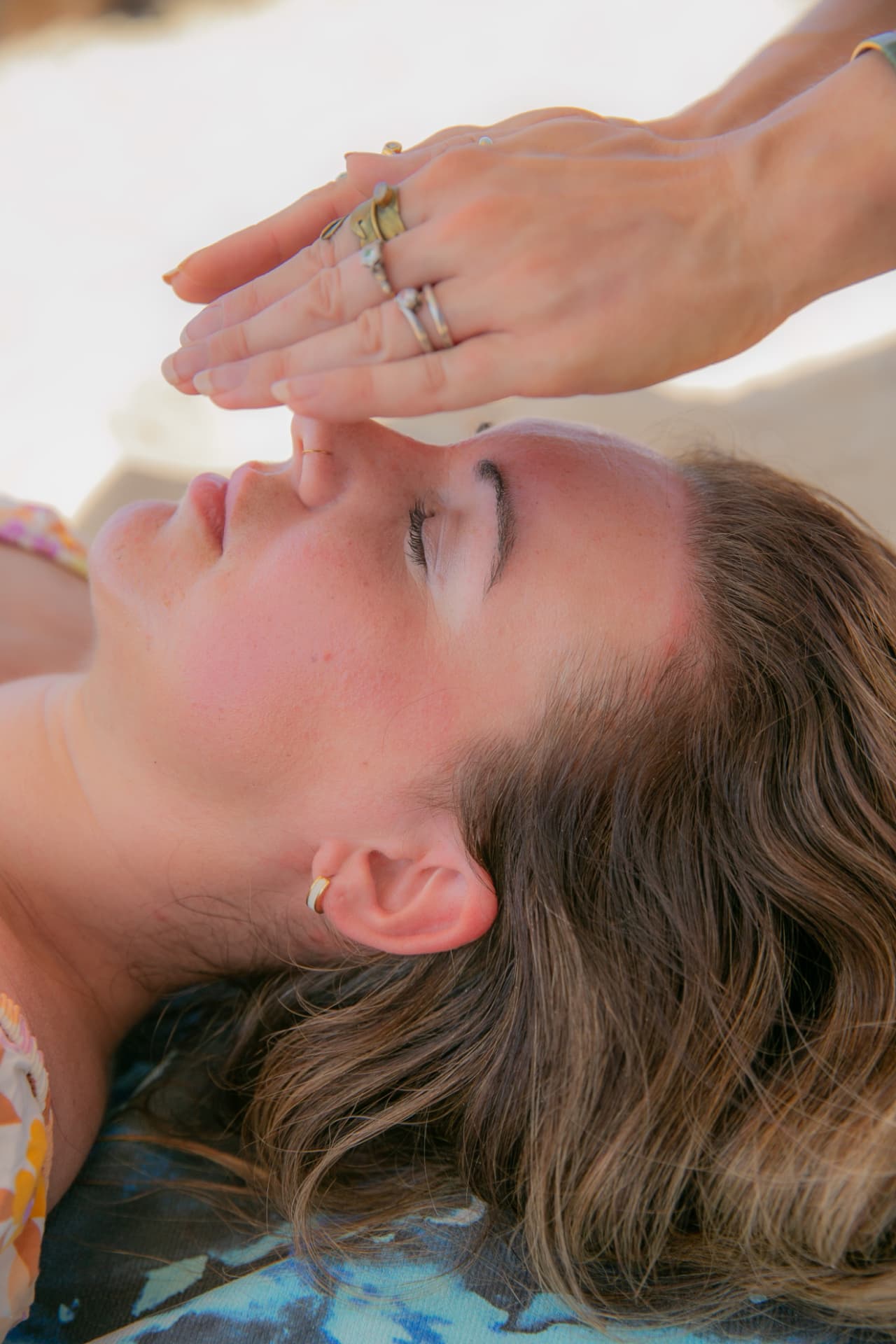
Reiki is one of those words that used to make people raise an eyebrow. Now it is showing up in the same conversations as strength training, breathwork and HRT. Midlife women are booking sessions in between school runs and gym sessions. New mothers are being gifted them instead of another muslin. It is not a trend I expected to see land the way it has, but honestly, I understand it. Most of us are exhausted, and Reiki asks nothing of you except that you lie down.
I want to talk about what it actually is, who it seems to help, and how it fits alongside the work you might already be doing with movement, food and sleep. Not as a replacement for any of that, but as something that supports the nervous system underneath it all.
What Reiki actually is
Reiki is a Japanese practice where a trained practitioner places their hands lightly on or just above your body while you rest fully clothed. There is no massage, no manipulation, no pressure. You lie there, they move slowly around you, and the room usually gets very quiet. That is essentially it.
The traditional explanation talks about energy moving through the body. The more grounded explanation is that Reiki gives your nervous system permission to drop out of fight or flight for an hour, which is something most modern women almost never allow themselves. Whichever explanation you prefer, the experience is the same. Your shoulders soften, your breathing slows, and by the end you often feel like you have been asleep without quite sleeping.
Why new mothers keep coming back to it
The postnatal period is one of the most physically and emotionally demanding stretches of a woman's life, and one of the least supported. You are healing from birth, feeding a small human, running on interrupted sleep and often trying to hold everything together for everyone else. Your nervous system has almost no room to settle. That is not a mindset problem, it is a biology problem.
Reiki gives new mothers something they rarely get. An hour where nobody needs anything from them, where they are not being asked to perform, produce or push through. The body reads that as safety, and safety is what allows healing to actually happen. Women often report better sleep in the nights that follow, softer emotions, and a feeling of being back in their own skin rather than watching their life from behind glass.
It is also gentle enough to sit alongside everything else the postnatal body needs. Rest, real food, pelvic floor work, walking, and eventually rebuilding strength. Reiki does not compete with any of that. It just softens the ground underneath it.
Why it lands so well in perimenopause and menopause
Perimenopause is a nervous system story as much as it is a hormonal one. As oestrogen and progesterone fluctuate, the calming buffer that used to take the edge off daily life gets thinner. Things that used to feel manageable start to feel loud, sleep becomes disturbed, the body is in a low hum of alertness even when nothing is wrong.
Reiki works with exactly that. It does not change your hormones, and anyone who tells you it does is overselling it. What it does is give your body a repeated experience of settling, and over time the nervous system learns that settling is available. That has a knock-on effect on sleep, on mood, on how reactive you feel to small stresses and, quietly, on how you carry yourself through the day.
For women in menopause and beyond, Reiki often becomes a kind of maintenance. Not a fix for anything specific, more a regular reset. A place where you are simply a person on a treatment couch, not a mother, partner, employee, carer or fixer of everybody else's problems.
How it sits alongside your training
If you are already lifting, running, doing yoga or building a proper strength habit, Reiki is not competing with any of it. If anything, it makes the rest of it work better. Training is a stress you put on the body on purpose, and the body only benefits from it if it can recover. Recovery is a nervous system job as much as a nutrition and sleep one.
A lot of the midlife women I work with train hard and then never quite come down from it. They finish a session, drive home, answer emails, cook dinner, and lie awake at midnight wondering why they feel wired. Reiki is one of the few things that gives that switch somewhere to flip. It pairs really well with strength training, walking, mobility work and yoga, and it tends to make hard sessions feel less like something you are punishing yourself with and more like something you are choosing.
It is also a lovely thing to sit next to a yoga or breathwork practice, because it uses the same currency. Slowing down, listening, letting the body have a say.
What to expect from a session
You stay fully clothed. You lie on a treatment couch, usually with a blanket over you. The practitioner will talk to you briefly at the start, then move quietly around you for around 45 to 60 minutes. Some people fall asleep. Some cry a little without really knowing why. Some feel warmth, tingling or a sense of heaviness. Some feel almost nothing during the session itself and then sleep like a stone that night. All of it is normal.
You do not have to believe in anything for it to be useful. You just have to be willing to lie down and let your system have an hour off.
What Reiki is not
It is not a medical treatment. It is not a replacement for your GP, your women's health physio, HRT, therapy or any of the other proper support you may need. If something is genuinely wrong, please get it looked at. Reiki sits alongside that care, it does not replace it.
It is also not a one-session fix. Like training or sleep, the effect builds with repetition. Most women feel something after one session and start to feel a real shift after three or four.
Where to start
Find a practitioner who is properly trained and who you feel at ease with. A short chat before you book usually tells you everything you need to know. Go in without expectations. Book a follow up before you leave.
You do not need to overhaul anything to add Reiki into your life. You just need an hour, a willingness to lie still, and permission to let something support you for a change.
Summary
Reiki is a gentle practice that helps the nervous system drop out of constant alertness. It sits beautifully alongside postnatal recovery, perimenopause and menopause, and everyday training. It will not replace your GP, your physio or your strength work, but it can support all of them by giving your body somewhere safe to settle. If you are running on empty, that is often the missing piece.