August 9, 2026
Gut Health in Midlife
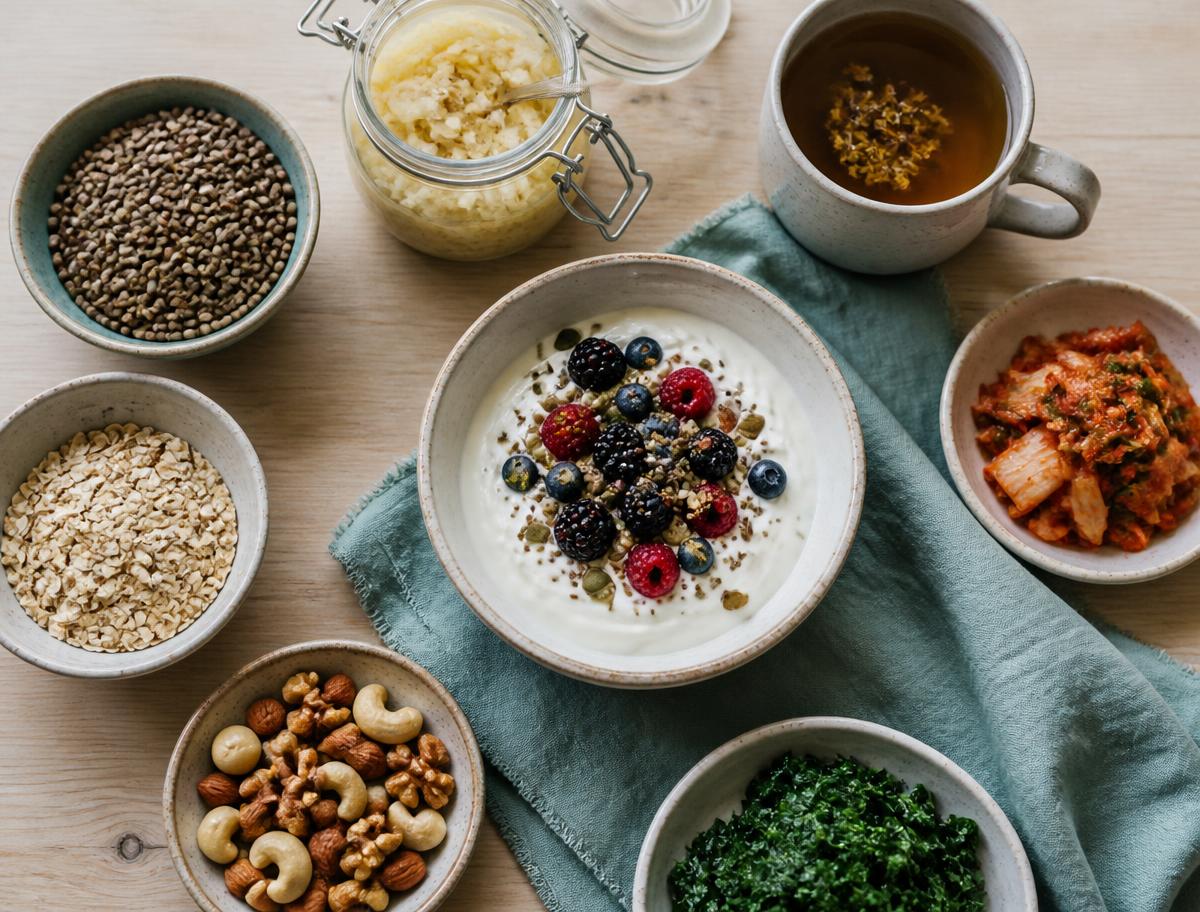
Something I hear constantly from the women I work with, is that their stomach has stopped behaving. Bloating by mid afternoon that was never there before. Food that has been fine for twenty years suddenly causing trouble. A digestive system that seems to have developed opinions. And then a whole supermarket aisle of expensive powders and capsules promising to sort it out, most of which will not.
So let us talk about what actually happens in the gut during this stage of life, and what is genuinely worth your time and money.
Your gut is not separate from your hormones
The gut and your hormones talk to each other constantly. Oestrogen and progesterone both influence how quickly things move through the digestive tract and how sensitive the gut wall is. As those hormones start fluctuating in perimenopause, the timing changes. Progesterone tends to slow things down, which is why constipation and that heavy, full feeling often turn up. When oestrogen dips, the gut lining can become more reactive, so foods that never bothered you start to.
There is also a set of gut bacteria involved in processing oestrogen. Researchers have given it the rather grand name of the estrobolome. The short version is that the state of your gut affects how much oestrogen gets recirculated rather than cleared, which means gut health is not a separate topic from hormone health. It is part of the same conversation.
Fibre is the boring answer, and it is still the answer
UK guidance is 30g of fibre a day for adults. Most of us in this country manage around 20g, and plenty of women manage far less than that, particularly when life is busy and meals are grabbed rather than planned. Fibre is what the useful bacteria in your gut actually eat. Without enough of it, no amount of supplementing will build a healthy microbiome, because you are posting bacteria into a house with no food in it.
What that looks like in practice is less exciting than the internet would like. Beans and lentils in things. Skins left on potatoes. Oats at breakfast. Wholegrain bread instead of white. A handful of nuts. Fruit with the peel on. Vegetables at more than one meal a day. None of it is a wellness ritual and all of it works.
Variety matters as much as quantity
The thing that has genuinely changed how I eat is the idea of plant variety rather than plant quantity. Different bacteria feed on different fibres, so eating a wide range of plants supports a wider range of species. The often quoted target is thirty different plant foods a week, which sounds impossible until you realise that herbs, spices, seeds, nuts, wholegrains, beans and tea all count.
Practically, it could be as simple as buying mixed bags rather than single items; mixed nuts instead of just almonds, a four bean tin rather than one type, frozen mixed berries, two or three herbs in a meal instead of one. It costs no more and takes no extra time, which is my favourite kind of change.
Fermented foods, honestly
Live yoghurt, kefir, kimchi, sauerkraut and unpasteurised miso all bring live bacteria with them. The evidence here is promising rather than conclusive, but it is decent, food is cheap compared to supplements, and most people tolerate small amounts well. Start small, because going from nothing to a jar of kimchi a day will make you very aware of your intestines. A few tablespoons daily is plenty.
One thing worth knowing. Anything sitting on a warm shelf in the middle of the supermarket has usually been pasteurised, which kills the bacteria you are paying for. Look in the chilled section and check for live cultures on the label.
Do you need a probiotic supplement
Probably not, and this is where a lot of money gets wasted. Probiotics are strain specific, meaning a particular strain has evidence for a particular problem, and most products on the shelf are a scattergun of strains with no evidence for anything in particular. They also do not colonise your gut permanently. When you stop taking them, the effect largely stops too.
There are situations where they genuinely help, such as after a course of antibiotics or for specific diagnosed conditions, and a GP or registered dietitian can point you to the right strain. As a general daily insurance policy against a low fibre diet, they are not it.
The same goes for at home microbiome testing kits. They are interesting, they are not diagnostic, and the advice that comes back is usually the same advice you would get for free. Eat more plants, more variety, less ultra processed food.
Stress, sleep and the part nobody wants to hear
Your gut has its own nervous system and it is wired directly to your brain. This is why nerves cause stomach trouble, and why chronic low grade stress causes chronic low grade digestive symptoms. If you are running on adrenaline all day, eating lunch at your desk in four minutes and sleeping badly, your digestion will reflect that no matter how many plants you eat.
Sitting down to eat, chewing properly, and taking ten minutes rather than three is not a wellness cliche. It genuinely changes how well you digest a meal. So does walking after dinner, which helps things move and blunts the blood sugar spike at the same time.
Movement changes your microbiome too
This is the part I find most encouraging. Regular moderate exercise appears to increase microbial diversity independently of diet. Walking, strength training and general daily movement all help gut transit and reduce constipation. So the training you are already doing for your muscles and your bones is doing something for your gut as well.
When to stop self managing and see your GP
This matters, so please do not skim it. Bloating and changes in bowel habit can be perimenopause. They can also be coeliac disease, thyroid problems, or something that needs proper investigation. Persistent bloating, unexplained weight loss, bleeding, a change in bowel habit lasting more than three weeks, difficulty swallowing or pain that wakes you at night all need a GP appointment rather than a diet experiment.
Do not cut out whole food groups for months on end trying to identify a trigger either. Elimination diets narrow your diet and often make gut symptoms worse in the long run. If you suspect intolerance, ask for help doing it properly.
Where I would start
Pick one meal and make it higher fibre. Breakfast is usually the easiest. Add one fermented food a few times a week. Buy mixed rather than single versions of things you already buy. Drink more water, because increasing fibre without fluid is genuinely uncomfortable. Sit down to eat once a day. Give it six weeks before you judge it, because gut bacteria shift over weeks rather than days.
It is slower and much less glamorous than a capsule with a nice label on it. It also works, which the capsule mostly does not.
Summary
Gut changes in perimenopause are real and hormonally driven. Fibre, aiming for 30g a day, and plant variety do far more than any supplement. Add small amounts of fermented food, eat sitting down, keep moving, and increase water alongside fibre. Skip the microbiome test kits, and see your GP for persistent bloating or any change in bowel habit lasting more than three weeks.