February 15, 2026
What Do You See in the Mirror?
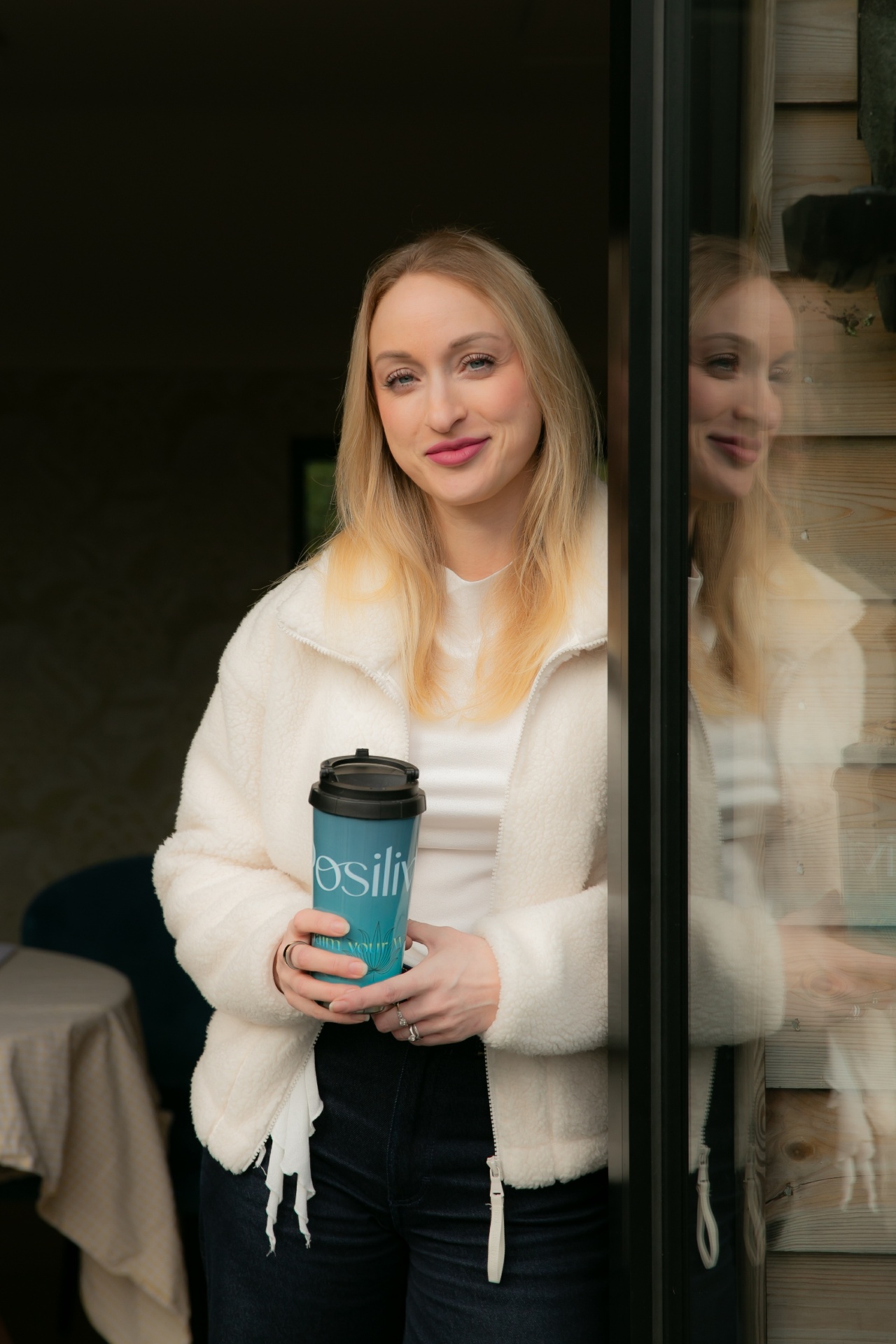
Do you look at your body in the mirror?
My husband made a joke the other day that I spend hours looking in the mirror at myself. I laughed and I laughed hard because he is right. Hours might be an exaggeration, but the sentiment stands.
I do spend time looking at my body, but it's not necessarily admiration. Although I am incredibly proud of my body for growing two humans and everything it does for me, when I stand in front of the mirror, I'm doing something far more practical than vanity.
It's Not Vanity. It's Data.
When I spend time looking at my body in the mirror, I'm learning. I'm learning what my body looks like at any given moment. Our bodies are in constant flux, from monthly cycles to changes from working out, motherhood, stress, sleep, and age. Each glance is a checkpoint. What's new? What's changing? What needs attention?
I notice new muscle definition after a block of training. I notice when my posture shifts. I notice when one side looks different from the other. These observations aren't about critique, they're about gathering information so I can respond intelligently.
Your Body Is in Constant Flux
We often treat our bodies as static objects, as if they should look and feel the same every day. But the reality is far more dynamic. Hormonal fluctuations across your cycle affect how you hold water, your energy levels, your mood, and even your joint stability. A hard week of training changes your muscle tone and your movement patterns. A week of poor sleep softens your posture and dulls your recovery.
If you don't look, you don't see these shifts happening. And if you don't see them, you can't adapt to them. Training the same way regardless of what your body is telling you is a fast track to burnout, injury, or simply feeling like your efforts aren't working.
What I've Learned from Looking
Recently, I noticed my shoulders were coming forward. Not dramatically, but enough. I traced it back to a training block with a heavy focus on push exercises combined with long hours at my desk. My anterior chain was overworking, and my posterior chain was losing the battle.
Note to self: stretch the chest, strengthen the upper back, bring back the face pulls. That single observation, made in the mirror, completely redirected my training for the next phase. Without it, I would have kept reinforcing the imbalance.
The Mirror as a Training Tool
As a Personal Trainer, I use the mirror as a diagnostic tool. I need to see, really see, where the imbalances are and how to fix them. Alignment, symmetry, movement quality, these are all visible if you know what to look for. And the person who knows your body best is you.
Why So Many Women Avoid the Mirror
So many of my clients tell me they avoid looking at their bodies in the mirror. And I understand why. For many women, the mirror has been a place of judgment, not learning. Years of diet culture, unrealistic imagery, and internalised criticism have turned self-observation into self-attack. The mirror becomes something to avoid, not a tool to use.
But what if we reframed it? What if standing in front of the mirror was less about how you look and more about how you function? Less about size and more about alignment? Less about flaws and more about feedback?
Shifting the narrative
The mirror doesn't have to be your critic. It can be your coach. It can show you what's working, what's shifting, and what needs adjusting. That shift in perspective, from judgment to curiosity, is one of the most powerful changes you can make in your relationship with your body.
Living in Collaboration with Your Body
Living in collaboration with your body is truly eye-opening. Instead of fighting against it, punishing it, or ignoring it, you start working with it. You notice. You adapt. You respond. That collaboration is what sustainable health and fitness look like long-term.
Your body is talking to you constantly. Through fatigue, through tension, through posture shifts, through how clothes sit differently from one week to the next. The mirror is simply one way to hear that conversation more clearly.
How to Start Looking with Purpose
If you're ready to try this approach, here's how to begin:
- Look neutrally. Remove the language of good and bad. Simply observe.
- Check alignment. Stand naturally and notice your shoulders, hips, and knees. Are they level? Is one side favoured?
- Notice changes over time. Take a mental snapshot and compare it week to week, not day to day.
- Connect it to your training. If something shifts, ask what you've been doing differently. Heavy push work? Lots of sitting? New stress?
- Respond, don't react. Use what you see to inform your next move, not to criticise your last one.
Try it
Stand in front of the mirror not to critique, but to learn. Scan your body with curiosity. What do you see? Where are you strong? Where are things shifting? What is your body trying to tell you today?
Your body is not a finished product. It is a living, changing, responsive system. The more you see it clearly, the better you can support it.
Summary
Looking at your body in the mirror is not vanity, it is a powerful tool for self-awareness and intelligent training. Your body is constantly changing, and the mirror offers real-time feedback on what needs attention, what is improving, and how to adapt your approach. By shifting from judgment to curiosity, you build a collaborative relationship with your body that supports long-term strength, balance, and wellbeing.