June 21, 2026
Accidentally Meditating on a Busy Beach
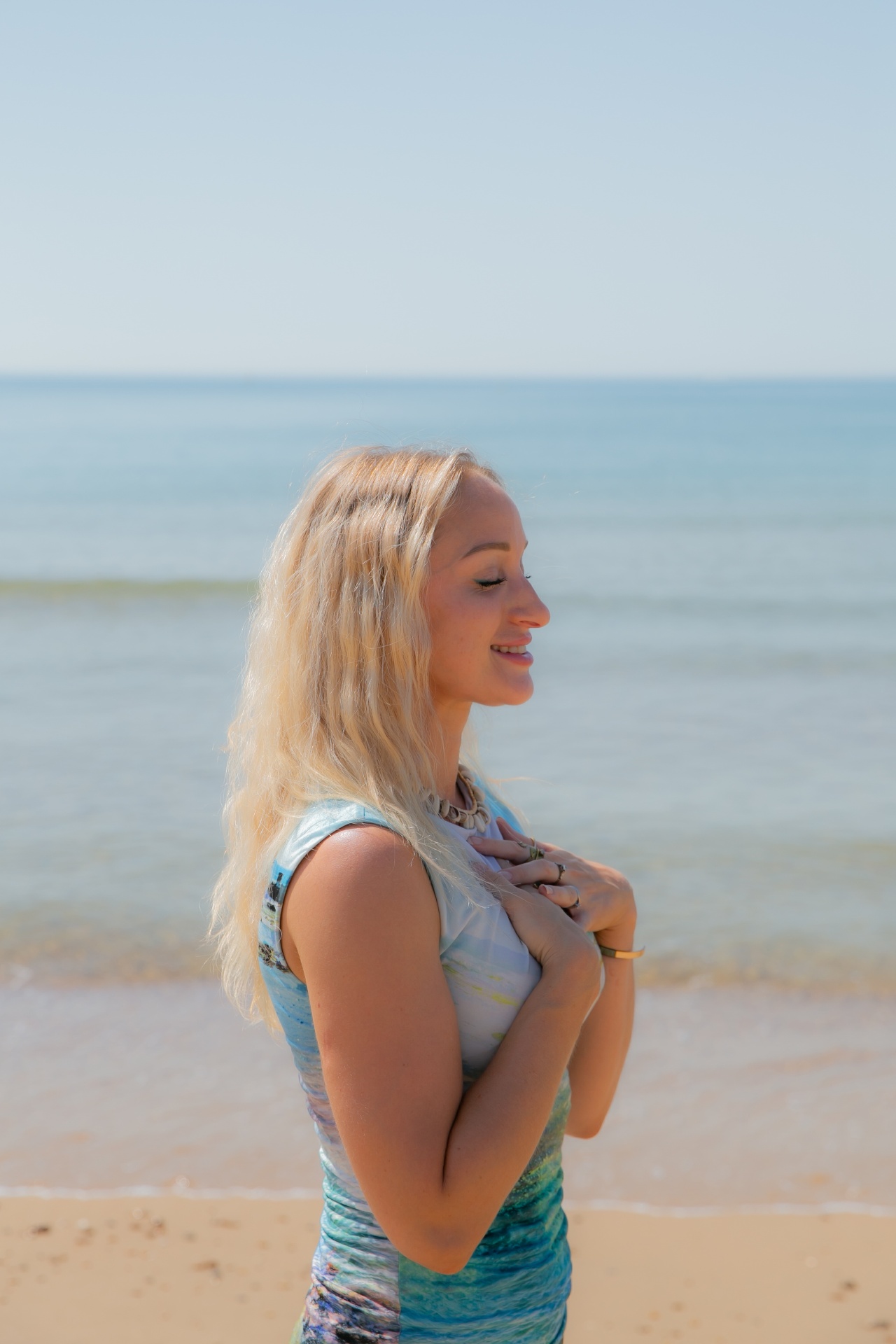
I had a photoshoot for the business this week. I started by pretending to be relaxed for a photoshoot and ended up accidentally meditating on a busy beach.
That was not the plan. The plan was to look natural, stand nicely, tilt my chin the right way and try not to squint into the sun while strangers laughed and had fun around me. The plan was to perform relaxation, not to actually find it.
Standing still, wind in my hair, listening to the sound of the sea, I was so relaxed I barely noticed Katie adjust my hair unprompted. The noise around me disappeared. The chatter on the beach, the camera shutter, the seagulls. All of it softened to a low hum. My shoulders dropped. My jaw let go. My breath slowed without me asking it to.
I got an unexpected reminder of what it feels like when your body finally stops bracing and just lets go.
The bracing we do not notice
Most women I work with are bracing for something, even when nothing is happening. Bracing for the next email, the school pick up, the work deadline, the difficult conversation, the to do list that never quite ends. The shoulders creep up. The jaw clenches. The belly stays pulled in. The breath shortens into the upper chest.
The hard part is that you stop feeling it, it becomes the norm. You assume that tight shoulders, shallow breathing and a low level of tension are just how you are. They are not. They are a body that has not been given permission to let go for a long time.
Why letting go is so hard
We are praised for being on it. For holding it all together. For being capable, prepared, three steps ahead. Letting go can feel uncomfortable because it can feel like dropping the ball. So we keep gripping, just in case.
Add to that hormonal shifts in perimenopause, broken sleep, caffeine on an empty stomach and a nervous system that has been on alert for years, and proper rest starts to feel almost wrong, almost guilty.
What it feels like when the body softens
When the body actually lets go, it is quiet. The breath drops lower into the ribs and belly. The shoulders sit further from the ears. The jaw loosens. The hands open. Sounds around you stop feeling like demands and start feeling like background. It is not dramatic. It is just less.
That state is not a luxury. It is where digestion works better, where sleep gets deeper, where hormones get a fairer chance to do their job, and where you stop running on adrenaline and cortisol.
You do not need a beach
You do not need a photoshoot, a retreat or a quiet room. You can borrow small pieces of that softening into a very ordinary day.
Notice your jaw right now. Notice your shoulders. Notice whether you are holding your stomach in. Take one slow breath into your ribs and belly. Let your exhale be longer than your inhale. Drop your shoulders away from your ears. That is it. That is one rep of letting go.
Stack a few of those moments through the day. Before you open your laptop. Before you walk into the school playground. Before you start cooking dinner. Tiny pauses where the body is allowed to stop bracing for a few breaths.
Maybe that is what we are all looking for
I went into that photoshoot trying to look relaxed and came out genuinely understanding what it feels like. It was a useful reminder that the goal is not to perform calm. The goal is to actually feel it more often, in ordinary moments, in our own bodies.
Maybe that is what we are all looking for a bit more of. Not another thing to add to the list. Just a little more permission to let go.
Summary
Most of us are bracing without realising it. The body softens when we stop performing and start noticing. You do not need a beach or a retreat, just small, repeatable pauses through the day where your jaw, shoulders, belly and breath are allowed to let go.